
Related reading: Parashat Vayeshev: Summary, Dvar Torah and Quiz and Parashat Vayishlach: Summary, Dvar Torah, and Quiz.
Parashat Vayera is the fourth portion in the Book of Genesis. In it, Avraham and Sarah stand before some of the Torah's most powerful moments: hospitality at the tent, the promise of Yitzchak's birth, Avraham's prayer for Sodom, Yitzchak's birth, the sending away of Hagar and Yishmael, the covenant at Be'er Sheva and the Binding of Yitzchak. This is a parashah about seeing: seeing a guest, seeing pain, seeing justice, seeing a child born after years of waiting, and seeing faith even when the path is difficult to understand.
Parashat Vayera in Brief
Parashat Vayera is read in Genesis, after Parashat Lech Lecha. The Torah reading runs from Genesis 18:1 to Genesis 22:24. According to the sources reviewed for this parashah, the common haftarah is II Kings 4:1-37, though community custom should be checked before publishing a full text.
The parashah moves through several major scenes:
- The revelation at Elonei Mamre and the hospitality of Avraham - Avraham sits at the entrance of the tent, sees three guests and runs to welcome them.
- The promise of Yitzchak's birth - the messengers announce that Sarah will have a son, and Sarah responds with a laugh of astonishment.
- Avraham's prayer for Sodom - Avraham stands before God and asks for justice and mercy even for a sinful city.
- The rescue of Lot and the destruction of Sodom - Lot and his family are brought out of the city, while Sodom and Gomorrah are destroyed.
- Avraham and Sarah in Gerar - Avraham and Sarah come to Gerar, where a complicated episode unfolds with Avimelech.
- The birth of Yitzchak - the promise is fulfilled, and Sarah bears a son to Avraham in their old age.
- Hagar and Yishmael in the wilderness - Hagar and Yishmael leave Avraham's home, and God hears the boy's voice and shows Hagar a well of water.
- The covenant at Be'er Sheva - Avraham and Avimelech make a covenant, and Be'er Sheva becomes a place of rootedness in the land.
- The Binding of Yitzchak - Avraham is called to the great test at Mount Moriah. At the end, it becomes clear that God does not desire a human sacrifice, but reverence, faithfulness and life.
Key Figures in the Parashah
Avraham
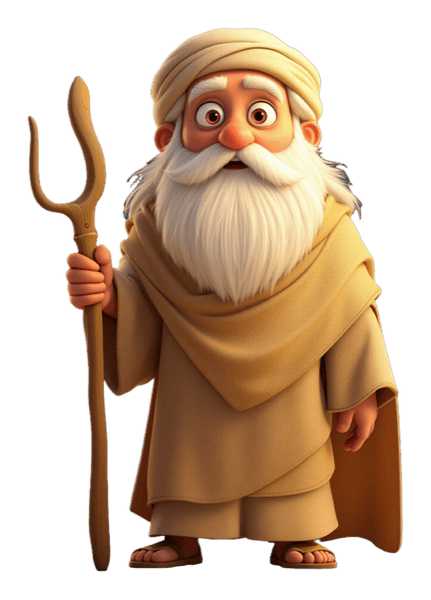
Avraham stands at the center of the parashah as a person of kindness, prayer and faith. He runs to guests even after circumcision, prays for Sodom even though its people are far from his path, cares for his household, and when the test of the Binding arrives, he walks to Mount Moriah with a difficult and complex loyalty. His character connects hospitality with moral responsibility.
Sarah
Sarah receives the promise of birth, laughs in astonishment and finally gives birth to Yitzchak. Her joy is not only private; it is the moment when the covenantal promise begins to take real shape in the home. At the same time, the relationship surrounding Hagar and Yishmael reveals the complexity and pain within the family.
Lot
Lot lives in Sodom and hosts the messengers in his home. He is rescued from the city, but his story teaches about the cost of living in a place whose morality has eroded. Even after his rescue, his story remains complicated and raises questions about choices, influence and environment.
Hagar and Yishmael
Hagar and Yishmael go into the wilderness of Be'er Sheva. It is a painful moment, yet the Torah emphasizes that God hears the boy's voice and sees their distress. The story teaches that even outside the covenantal path of Yitzchak there is providence, life and future.
Yitzchak
Yitzchak is born after years of waiting and receives a name connected to laughter and wonder. At the end of the parashah he appears in the Binding, a moment that accompanies the Jewish people through generations as a question of faith, devotion, limits and the sanctity of life.
Avimelech and the Messengers
Avimelech, king of Gerar, encounters Avraham and Sarah in a story that requires moral caution and correction. The messengers, by contrast, open the parashah with mission and news: a promise to Sarah, rescue for Lot and the clarification of Sodom's condition.
Places and Spatial Ideas
- Elonei Mamre - the place of revelation and hospitality; an open tent from which the parashah begins.
- Sodom and Gomorrah - cities that represent deep social corruption, hardness and injustice.
- Tzoar - the place to which Lot flees after the destruction of Sodom.
- Gerar - Avimelech's city, where Avraham and Sarah face fear and risk.
- The wilderness of Be'er Sheva - a place of thirst, loneliness and rescue for Hagar and Yishmael.
- Be'er Sheva - a place of covenant, well, planting and calling in God's name.
- The land of Moriah - the landscape of the Binding, where faith is tested to the limit.
Central Idea: Seeing the Person Before You
The word "vayera," "He appeared" or "he saw," opens the parashah, but it also becomes a key to the whole portion. Avraham sees the guests and runs to them. God sees the outcry of Sodom. Avraham asks whether righteous people can be found in the city. Hagar sees no way forward until God opens her eyes to the well. At Mount Moriah, Avraham gives the place a name connected to seeing and providence.
The parashah teaches that spiritual vision is not only a lofty idea. It begins with the ability to see another person: a tired guest, a city in moral crisis, a crying child, a tense family and a hard question that cannot be solved with a slogan. When a person truly sees, he does not remain indifferent; he welcomes guests, prays, repairs and asks for life.
A Short Dvar Torah for Parashat Vayera
Parashat Vayera opens with a meeting between divine revelation and hospitality. Avraham sits at the entrance of the tent, and instead of remaining inside a private spiritual moment, he runs toward people passing by. From this emerges a deep message: closeness to God does not detach a person from other people; it demands that we notice them even more.
This is a beautiful point for the Shabbat table. Sometimes the spiritual world seems to be made of lofty thoughts, prayer and inner intention. Parashat Vayera reminds us that the test of spirituality is also found in the open door, a cup of water, a kind word and the speed with which we notice that someone needs us.
For children, it can be said simply: Avraham did not wait for the guests to ask. He saw them first. We too can learn to see: who is left alone in a game, who needs help with schoolwork, who is quietly sad. Parashat Vayera teaches that kindness begins with open eyes.
The Haftarah for Parashat Vayera
The common haftarah for Parashat Vayera is II Kings 4:1-37. It tells of Elisha, a woman in need of help, the miracle of the oil, and the Shunammite woman who is blessed with a son and later faces a deep crisis until the child returns to life.
Parashat Vayera for Children
A good way to learn the parashah with children is to divide it into seven pictures:
- Avraham sits at the entrance of the tent and sees guests.
- Sarah hears that she will have a son and laughs in wonder.
- Avraham prays for Sodom and asks for mercy.
- Lot and his family escape from the city.
- Yitzchak is born, bringing great joy into the home.
- Hagar and Yishmael find water and life in the wilderness.
- Avraham and Yitzchak walk to Mount Moriah, and the test ends with rescue.
Conversation question for children: whom can we "see" and help this week before they ask?
Questions for Children and Adults
Questions for Children
- Who saw the guests at the entrance of the tent?
- What did the messengers tell Avraham and Sarah?
- For which city did Avraham pray?
- Who was born to Avraham and Sarah in the parashah?
- Who were in the wilderness until God showed Hagar a well of water?
Questions for Adults
- What does Avraham's hospitality teach about the relationship between spirituality and social responsibility?
- Why does Avraham pray for Sodom even though he knows of its wickedness?
- How does the story of Hagar and Yishmael broaden the idea of providence in the parashah?
- What is the connection between Yitzchak's birth and the Binding at the end of the parashah?
- How can the Binding of Yitzchak be taught to children responsibly, sensitively and without fear-based framing?
Parashat Vayera Quiz
- In which book of the Torah is Parashat Vayera found?
- What is the Torah-reading range of Parashat Vayera?
- Where was Avraham sitting at the beginning of the parashah?
- How many guests did Avraham see?
- What promise did Sarah receive?
- For which city did Avraham pray before its destruction?
- What was the name of the son born to Avraham and Sarah?
- Where did Avraham make a covenant with Avimelech?
- Where did Avraham and Yitzchak go in the story of the Binding?
- What is the common haftarah for Parashat Vayera?
CTA: Continue to the Parashat Vayera quiz and see how much you remember about the guests at the tent, Sodom, Yitzchak's birth, Hagar and Yishmael, Be'er Sheva and the Binding of Yitzchak.
Frequently Asked Questions
What is Parashat Vayera?
Parashat Vayera is the fourth Torah portion in Genesis. It tells of Avraham's hospitality, the promise of Yitzchak's birth, Avraham's prayer for Sodom, Lot's rescue, Yitzchak's birth, Hagar and Yishmael, the covenant at Be'er Sheva and the Binding of Yitzchak.
What is the Torah-reading range of Parashat Vayera?
The reading runs from Genesis 18:1 to Genesis 22:24. It begins with God's appearance to Avraham at Elonei Mamre and ends after the Binding of Yitzchak and the listing of Nachor's family.
What is the central idea of Parashat Vayera?
One central idea is moral seeing: seeing the other person, seeing distress, seeing justice and acting with kindness and responsibility. The parashah connects hospitality, prayer, family and faith.
What is the haftarah for Parashat Vayera?
The common haftarah is II Kings 4:1-37. It focuses on Elisha, the Shunammite woman, the promise of a child and the child's return to life, connecting to Yitzchak's birth and to the themes of kindness and life in the parashah.
How can Parashat Vayera be taught to children?
It is helpful to teach it through story pictures: Avraham's tent, the promise of Yitzchak, Avraham's prayer for Sodom, Lot's rescue, Yitzchak's birth, Hagar and Yishmael in the wilderness and the Binding of Yitzchak. The Binding should be explained sensitively, with emphasis on the ending: the offering is stopped and Yitzchak is saved.
Does this page include the full text of the parashah?
Developer Implementation Notes
Recommended schema: Article, BreadcrumbList FAQ Page and HowTo for "how to learn Parashat Vayera with children." On mobile, open with a short summary and then navigation buttons: summary, figures, Dvar Torah, haftarah, quiz and FAQ. The quiz should ideally appear as a short interactive module with expandable answers.