
Bible Quiz Blog
Hard Bible Questions as a Game Tool: The Secret Behind Reconnecting With the Sources
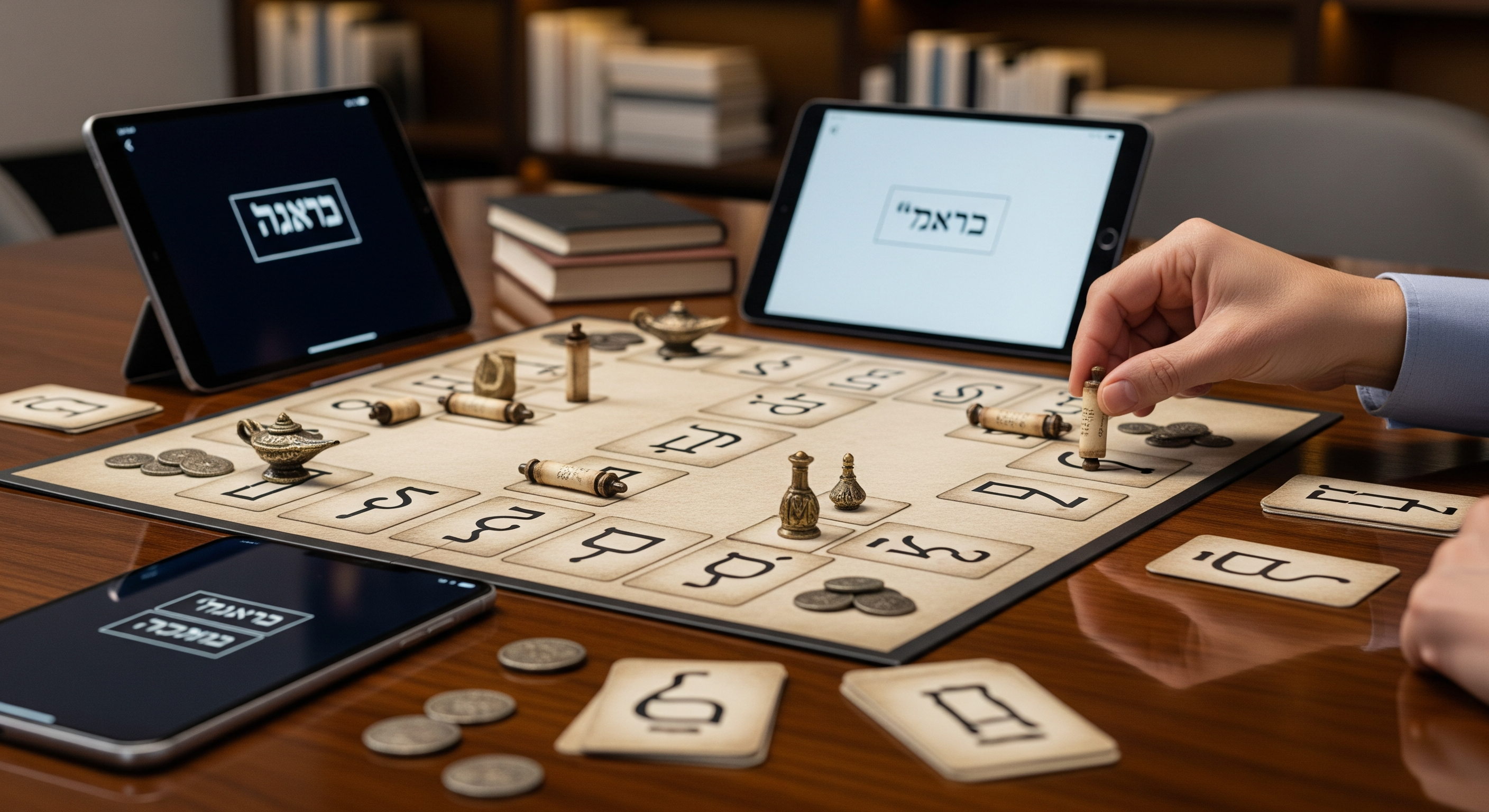
Hard Bible Questions: The Psychology Behind Biblical Trivia Games
How does it happen that a teenager, used to receiving instant gratification from flickering screens, suddenly finds themselves gripped by the Book of Leviticus or the complex prophetic chapters of Jeremiah? The answer does not lie in simplifying the material or giving up on depth, but in a simple yet powerful paradigm shift: turning the ancient text into an intellectual challenge. When we examine long-standing institutions like the Bible Quiz, we discover that the secret to attracting young audiences is not hidden in lowering the bar. On the contrary, it lies in the strategic use of those very hard Bible questions as a tool of gamification.
Instead of viewing the textual difficulty as an obstacle to be smoothed over or skipped, the innovative approach turns the difficulty itself into an engine of curiosity. This article analyzes how challenging trivia questions build long-term memory, why the psychology of the game bridges generation gaps, and how turning Torah study into a healthy competition produces far deeper engagement than any passive reading.
The Problem: When the Ancient Text Becomes a Passive Experience
The traditional method of learning religious and humanities subjects suffers from a built-in and well-known problem: it tends to reward passivity. In the classic structure, a teacher or parent reads the verses aloud, explains the difficult words, and the student is supposed to absorb, nod, and memorize. This approach clashes strongly with the way the human brain, and especially that of the younger generation, is currently wired to consume and process information.
When you reach syntactically complex verses or long genealogical lists in the Book of Chronicles, the level of attention naturally plummets. The gap between the active level of stimulation of an average video game and a printed, text-heavy page is enormous.
The common attempt to deal with this gap is through "accessibility" - telling only light stories while skipping the complex parts. But here lies precisely the problem: when we lower the level of challenge and give up on hard Bible questions, we lose the learner's genuine interest and make the text appear shallow and meaningless.
The Solution: Gamification and Cognitive Challenge
The answer to the attention crisis is not found in dumbing down the content, but in changing the framework in which it is presented. This is where the power of gamification enters the picture. The moment we package the biblical information within a scored trivia game format, the participant's psychological and neurological response changes completely.
A question like "How many times is the word joy mentioned in the Book of Ecclesiastes?" sounds like a completely dry chore within an ordinary frontal lesson. But within a game platform, with a timer counting down and points on the line, it becomes a riddle that demands immediate solving.
The human brain recognizes the situation as a sporting challenge. It secretes dopamine in response to success or a correct solution, and generates strong internal motivation to continue exploring the text in order to win the next round. The difficulty stops being a burden and becomes a goal.
Deep Dive: Why Is Difficult Actually Good?
To understand the mechanism in depth, one must look at basic principles of game design and cognitive psychology. Every successful game must move delicately along the thin seam between frustration and boredom. This optimal state is known in the professional literature as Flow theory). If the questions are too easy and require no effort, the player quickly loses interest. Conversely, if they are completely impossible, the player gives up and abandons.
The practical solution is to create a graduated system. Incorporating 3 varying difficulty levels in the app or game allows every player, from child to adult, to find their challenging comfort zone.
Especially hard questions function in this world like "bosses" in video games. They require the player to return to the sources, open the physical or digital book, and actively search for the answer. Real learning occurs not while typing the answer, but on the investigative path toward it. This is an experiential memory that is etched far more deeply than any ordinary memorization.
When Does It Work in Practice? 3 Scenarios From the Field
The psychological theory sounds promising, but how does it meet everyday reality? Here are several situations in which the gamification approach consistently proves itself:
1. The Family Shabbat Table Instead of asking the children "What did you learn this week in the portion?" and receiving laconic one-word answers, many families switch to an interactive quiz format. Healthy competition between parents and children, based on questions with surprising answers, keeps everyone around the table longer and generates lively discussion about the characters and events.
2. An Active Aid for the Teacher in the Classroom Teachers who incorporate a short 10-minute trivia game at the beginning or end of the lesson report an immediate rise in the general level of attention. The students enter "game mode," become more active, and are ready to tackle more complex texts knowing it will help them win the next game.
3. Preparation for Competitive Settings Students preparing for the World Bible Quiz or its national equivalent are required to master enormous amounts of information from all 39 books of the Bible. Using digital trivia apps that offer complex simulations turns the grueling memorization process into focused, athletic training that prevents burnout.
The Key Insight: Challenge Creates Belonging
Here is precisely where most people fall in understanding the concept: they think the purpose of question games is to test existing knowledge. But the real, deeper insight is that the game does not test knowledge - it creates it from scratch.
When a player errs on a hard question about the journeys of the Israelites in the desert, they do not feel that they have "failed" the way they feel when they receive a low grade on a school exam. They feel a tactical miss in a game. Their immediate, natural response is a strong desire to try again and correct it.
This cyclical process - of error, correction, and relearning within a safe game environment - builds an enormous sense of competence. The verses turn from "school material" into "my personal playground."
The Clear Advantages of the Approach
Beyond the immediate enjoyment, using complex questions within a game framework has several long-term advantages:
First, long-term memory. Information acquired through active effort and emotional engagement (such as the tension of a game or the joy of victory) is retained in the brain for far longer than information read superficially.
Second, community building. Digital platforms available on 2 different platforms (such as a computer browser and an Android app) allow people to compete against friends or family members, which turns individual, solitary learning into a bonding social experience.
Third, broad familiarity. The Bible contains 929 chapters, and most people are familiar with only a small handful of them. A good trivia game forces the player to leave the comfort zone of the Book of Genesis and discover the richness of the Twelve Minor Prophets or the Writings.
When This Approach Collapses: The Other Side of the Coin
It sounds excellent on paper, but there are cases in which using hard questions as a game tool may achieve exactly the opposite result. It is essential to recognize the drawbacks and risks in order to avoid them.
The first risk is an extreme mismatch in difficulty level. If a fourth grader encounters a string of niche questions intended for adults or for national Bible Quiz contestants, the immediate frustration will overcome the playfulness. A system that does not allow the selection of a personalized level will be abandoned quickly and will not achieve its educational purpose.
The second and deeper risk is the danger of "hollow trivia." Over-focusing on dry, technical details - such as exactly how many years Methuselah lived or the name of the chief baker - may completely miss the value-based and moral essence of the text. A quality educational game must also incorporate questions of understanding, context, and meaning. If we turn the Book of Books into a phone book of names and dates alone, we have missed the central purpose of learning.
Practical Implications: What to Do Tomorrow Morning?
How do you begin to apply these insights in practice? The secret lies in gradualness and in using the right tools.
If you are a parent, try preparing 5 trivia questions in advance for the coming weekly Torah portion. Make sure you have a balanced mix: two easy questions to warm up and build confidence, two medium questions, and one truly hard question that will require everyone to open a Torah scroll and search for the answer together.
If you are a teacher, open your next lesson with one complex riddle from the text, and offer bonus points to whoever finds the exact answer. Using ready-made digital platforms can save you hours of preparation work and provide you with a professional, varied bank of questions at the press of a button.
Key Points for the Road Ahead
- Gamification changes the approach to the text: it turns passive memorization into an active, rewarding challenge.
- Hard questions do not deter learners when they are presented within a clear framework of game and healthy competition.
- Adjusting the difficulty level is critical to success: a question that is too hard without prior preparation will create frustration, whereas a question challenging at the right level will generate a sense of achievement and a desire to continue.
- Beware of turning learning into a collection of technical details, and be sure to incorporate questions that require understanding and context.
Looking for a way to bring this new energy home or into the classroom? Instead of trying to reinvent the wheel and write questions on your own, it is worth trying dedicated Jewish trivia platforms. Systems offering a rich bank of questions at varying levels let you start playing immediately. A short, shared session can be the first and most significant step toward a genuine and deeper connection to our foundational texts.
FAQ
How can Bible trivia games help children who are used to screens?
Bible trivia games turn passive learning into an active intellectual challenge. Instead of consuming information passively, children are required to think, search for answers, and solve riddles. This cognitive stimulation, combined with elements of competition and scoring, mimics the addictive dynamics of screen games but directs them toward meaningful learning. In this way, difficulty becomes an engine of curiosity, and the ancient text comes to life as a fascinating challenge.
What is the difference between traditional Bible study and the gamification approach?
Traditional learning tends to be passive, with the teacher or parent conveying the information and the student expected to absorb and memorize. By contrast, the gamification approach turns the learner into an active player. Instead of reading verses aloud, challenging trivia questions pose challenges that require active searching in the text. Turning learning into a game with scoring, timers, and competitions generates strong internal motivation and far deeper engagement than passive reading.
Are hard Bible questions really effective for long-term memory?
Yes, hard questions presented within a game framework are especially effective for long-term memory. When we encounter a challenging question, we are forced to return to the sources, actively search for the answer, and process the information in depth. This process, which involves cognitive effort and emotional engagement (such as the slight frustration of the difficulty and the satisfaction of the solution), creates an 'experiential memory' that is etched deeply and durably in the brain, in contrast to superficial memorization of information.
When might the gamification approach to Bible questions fail?
The gamification approach may fail when the difficulty level of the questions is not suited to the participants. If a young child encounters niche questions intended for advanced learners, the frustration may overcome any enjoyment or motivation. Another risk is 'hollow trivia,' which focuses only on dry, technical details (such as names or numbers) and misses the value-based and moral messages of the text. A quality educational game must also incorporate questions of understanding, context, and meaning.
How can the gamification approach be applied at home or in the classroom immediately?
The approach can be applied easily by preparing several trivia questions for the weekly Torah portion or the study topic. It is recommended to include a mix of questions: two easy ones to build confidence, two at a medium level, and one challenging question that will require a joint search in the sources. For teachers, a lesson can be opened with a complex riddle offering bonus points. Using dedicated digital platforms can save preparation time and provide a varied bank of questions.
What is the advantage of hard Bible questions compared with easy ones?
Questions that are too easy require no intellectual effort and may lead to boredom and a quick loss of interest. By contrast, hard questions, when presented within a framework that is challenging yet achievable, are the ones that drive real learning. They require the learner to return to the sources, investigate, understand in depth, and apply critical thinking. This process builds a sense of competence, deepens understanding, and creates a stronger, more personal connection to the text.
Is there a risk of turning Bible study into a game alone, without deep understanding?
Such a risk exists if the focus is solely on dry, technical details, such as names, dates, or numbers. A quality trivia game should not replace inner learning and value-based understanding, but should serve as an aid that encourages it. Good questions should also include aspects of understanding, interpretation, and historical and moral context. The goal is not just to know the answer, but to understand the meaning behind it, through the process of searching and discovery.