

Related reading: Parashat Haazinu: Summary, Dvar Torah and Quiz and Parashat HaMan for Livelihood - Text, Explanation, Audio, and Printable Guide.
Parashat Devarim opens the Book of Deuteronomy and the farewell speeches of Moses. The Israelites stand east of the Jordan, very close to entering the Land, and Moses does not begin with a military plan or a list of tasks. He begins with memory: what we went through, where we failed, how God carried us on the way, and what must be carried forward in order to enter the Land as a responsible free people.
This page is designed for Shabbat-table learning, classroom use, bar mitzvah preparation, or a weekly Torah quiz. The portion is especially useful for discussing leadership, gentle rebuke, responsibility, trust, and the ability to turn memory into repair.
The Portion at a Glance
- Book: Deuteronomy
- Chapters: Deuteronomy 1:1-3:22
- Central theme: Moses recalls the wilderness journey to prepare the people to enter the Land
- Time and place: the fortieth year after the Exodus, east of the Jordan
- Haftarah: the Haftarah of Chazon, Isaiah 1:1-27, read in most communities on the Shabbat before Tisha B'Av
- Quiz connection: a Parashat Devarim quiz about Moses' speech, the appointment of judges, the spies, Sihon and Og, and the preparation for entering the Land
Summary of Parashat Devarim
The portion opens by describing the place and time in which Moses speaks to Israel. They are east of the Jordan, after long years in the wilderness, and Moses begins to retell the journey they have traveled. Already in the opening, he mentions places that hint at painful moments along the way, but he does so with restraint. Instead of shaming the people with unnecessary detail, he names the matters in a way that allows them to understand and learn.
Moses returns to the period when Israel was at Horeb. God commanded them to set out and go up to the Land promised to the ancestors. The people had grown numerous, and Moses describes how he could not carry the burden of leadership alone. Wise, discerning, and known men were therefore chosen to serve as leaders over thousands, hundreds, fifties, and tens. Moses instructs the judges to judge fairly, show no favoritism, hear the small and the great alike, and fear no person.
Moses then recalls the sin of the spies. Israel reached Kadesh-barnea, asked to send men to scout the Land, and the scouts returned with the fruit of the Land and testimony that the Land was good. But the report about fortified cities and giants frightened the people. Instead of trusting God's promise, they drew back and refused to go up. Moses reminds them that God carried them through the wilderness like a parent carrying a child, yet fear overcame trust.
Because of that failure, the generation that left Egypt was decreed not to enter the Land. Caleb son of Jephunneh and Joshua son of Nun stand out as figures of trust and courage. After the people hear the decree, some try to go up and fight despite the warning, but the attempt fails because it comes from panic rather than obedience.
Moses continues by describing the long years of travel. Israel circles Mount Seir, passes near Edom, Moab, and Ammon, and receives instructions not to provoke certain peoples because they too have territories assigned to them. Only when Sihon king of Heshbon refuses Israel passage and comes out to war does Israel fight and defeat him. They then defeat Og king of Bashan as well.
At the end of the portion, Moses recalls the distribution of territory east of the Jordan to the tribes of Reuben, Gad, and half of Manasseh, and his charge to Joshua not to fear the kings he will meet later. What Joshua saw with Sihon and Og is meant to strengthen him for the entry into the Land.
Main Characters
Moses
Moses is the central speaker of the portion. He is not merely telling history; he is educating the generation that will enter the Land. He recalls failures without erasing hope and teaches that the past should become responsibility, not a burden of shame.
The Israelites
The people stand on the threshold of the Land. Many of the listeners did not experience the Exodus as adults, so Moses builds a shared memory for them: this is your story, and this is what you must learn from it.
The Judges and Leaders
The wise and recognized men chosen for leadership represent the need for ordered public life. A people cannot enter the Land with enthusiasm alone; it needs justice, integrity, responsibility, and shared leadership.
The Spies
The spies are the painful turning point of the portion. They saw that the Land was good, but they emphasized the fear until the people's heart weakened. Their story shows how words can build courage or dissolve it.
Caleb and Joshua
Caleb and Joshua symbolize trust, steadiness, and a vision wider than immediate fear. Joshua, who will soon lead the people, receives a special encouragement from Moses at the end of the portion.
Sihon and Og
The two kings appear near the end of the portion as examples of real resistance on the road to the Land. The victory over them is not only a military event; it becomes a source of strength for Joshua and the people.
Places in Parashat Devarim
- East of the Jordan: the setting of Moses' speech and the final preparation for entering the Land.
- Horeb: the place from which the movement from mountain to Land begins.
- Kadesh-barnea: the place from which the spies were sent and where the people's trust broke.
- Mount Seir: the region of Edom, where Israel is commanded to proceed carefully and not provoke its inhabitants.
- Moab and Ammon: peoples against whom Israel is commanded not to open war.
- Heshbon and Bashan: the kingdoms of Sihon and Og, where the battles at the end of the portion take place.
The places in the portion are not only points on a map. Each place is a lesson: a place that remembers fear, a place that remembers boundaries, a place that remembers justice, and a place that remembers that moving forward requires courage.
Central Idea: Remember in Order to Repair
The Book of Deuteronomy begins with Moses' words, but these words are not an ordinary farewell speech. Moses teaches the people how to remember. He does not recount the past in order to trap the people in failure, but so that the new generation can enter the Land with open eyes.
There is memory that weakens: "We already failed, so perhaps we cannot succeed." And there is memory that strengthens: "We have seen what happens when fear leads us, so this time we will choose differently." Parashat Devarim chooses the second kind. It recalls the spies, the difficulty of leadership, and the wars, but all of it leads to one call: do not fear the Land, and do not forget who you are on the way to it.
Short Dvar Torah for Parashat Devarim
Moses rebukes Israel, but he does it with sensitivity. At the very beginning of the portion, he mentions places that allude to sins without immediately spelling out every painful detail. This is not avoiding the truth. It is truth spoken in a way that can be heard.
Sometimes criticism is spoken in order to win, and then it closes the heart. But the criticism of a true leader is spoken in order to open a path. Moses does not want the new generation to remain stuck in the guilt of the previous one. He wants them to learn from the story and build a different future.
That is why Parashat Devarim is a portion of repairing speech. It teaches parents, teachers, and leaders a simple but difficult rule: if you want a person to change, tell the truth in a way that respects their ability to rise from it. Do not blur the truth, do not humiliate, but turn memory into responsibility.
On the Shabbat before Tisha B'Av, when we also read the Haftarah of Chazon, this lesson becomes even deeper. Destruction does not begin only with falling stones, but with a society that no longer listens to rebuke rooted in justice. Parashat Devarim invites us to hear criticism not as an insult, but as an invitation to repair.
The Haftarah of Parashat Devarim: Shabbat Chazon
Parashat Devarim is usually read on the Shabbat before Tisha B'Av, and its haftarah is called "Chazon," after the opening word of the Book of Isaiah. The haftarah describes a society that continues external ritual while neglecting justice, righteousness, and care for the vulnerable. It therefore fits the spiritual mood before Tisha B'Av: not only mourning destruction, but asking what builds a repaired society.
The connection to the portion is clear. Moses opens Deuteronomy with rebuke that demands responsibility, and Isaiah continues with a prophetic voice calling the people to correct their ways. In both places, rebuke is not the goal in itself. It is meant to bring the people back to justice, trust, and closeness to God.
Questions for Children
- Why does Moses retell the wilderness story to Israel?
- Why did Moses need to appoint additional judges and leaders?
- What made the people afraid after the spies returned?
- Who were Caleb and Joshua, and what can we learn from them?
- Why is it important to give criticism in a way that does not shame?
Questions for Adults and Family Learning
- What is the difference between memory that weakens and memory that repairs?
- Why does Moses begin Deuteronomy by reviewing the past?
- What does the appointment of judges teach about the conditions for entering the Land?
- How can the sin of the spies be taught without treating fear itself as wrong?
- What is the connection between Parashat Devarim, the Haftarah of Chazon, and Tisha B'Av?
Parashat Devarim Quiz
Questions
- In which book of the Torah is Parashat Devarim found?
- Where are the Israelites standing when Moses begins speaking to them?
- Why did Moses appoint additional judges and leaders?
- From which place were the spies sent, according to Moses' speech?
- What did the spies say about the Land on the one hand, and what frightened the people on the other?
- Which faithful scout would later enter the Land and lead the people?
- Which peoples was Israel commanded not to provoke on the way?
- Against which two kings did Israel fight near the end of the portion?
- Which tribes received territory east of the Jordan?
- What is the name of the haftarah usually read with Parashat Devarim?
Answers
- The Book of Deuteronomy.
- East of the Jordan, near the entrance to the Land.
- Because Moses could not carry the burden of judgment and leadership alone.
- From Kadesh-barnea.
- They said the Land was good, but described fortified cities and giants that frightened the people.
- Joshua son of Nun.
- Edom, Moab, and Ammon, according to the instructions given on the journey.
- Sihon king of Heshbon and Og king of Bashan.
- Reuben, Gad, and half the tribe of Manasseh.
- The Haftarah of Chazon.
Printable or PDF Activity
Create a worksheet called "Memory That Becomes Repair." Divide it into three areas:
- "What happened?" - children write one event from the portion: appointing judges, the spies, or Sihon and Og.
- "What do we learn?" - they write one lesson: trust, justice, courage, or respectful speech.
- "What will we do this week?" - each child chooses one small act of repair: apologizing, helping, judging favorably, or facing a hard task with courage.
You can add a simple map of the eastern side of the Jordan, Kadesh-barnea, Edom, Moab, Ammon, and the Land of Canaan.
FAQ About Parashat Devarim
Where is Parashat Devarim found in the Torah?
Parashat Devarim is at the beginning of Deuteronomy, from 1:1 through 3:22.
What is the main theme of Parashat Devarim?
The main theme is Moses' speech to the generation about to enter the Land: remembering the journey, repairing the sin of the spies, appointing just leadership, and strengthening faith for the future.
Why is Parashat Devarim read before Tisha B'Av?
Parashat Devarim is usually read on the Shabbat before Tisha B'Av, Shabbat Chazon. Both the portion and the haftarah speak about rebuke, responsibility, and repair, making them fitting for the spiritual preparation of these days.
What is the haftarah of Parashat Devarim?
In most communities, the Haftarah of Chazon, Isaiah 1:1-27, is read. It is always best to check according to the calendar and local custom.
Are there commandments in Parashat Devarim?
Parashat Devarim does not present a list of practical commandments in the way some other portions do. Its main content is Moses' historical and educational speech preparing the people to enter the Land.
How can Parashat Devarim be taught to children?
It can be taught through three simple themes: Moses remembers the journey, the people learn not to be ruled by fear as in the story of the spies, and good leadership requires justice and responsibility.
Parashat Devarim Quiz CTA
After reading the summary, try a Parashat Devarim quiz: who spoke east of the Jordan, why judges were appointed, what happened in the sin of the spies, who Sihon and Og were, and what the Haftarah of Chazon teaches about social and spiritual repair.
Illustration and Design Ideas
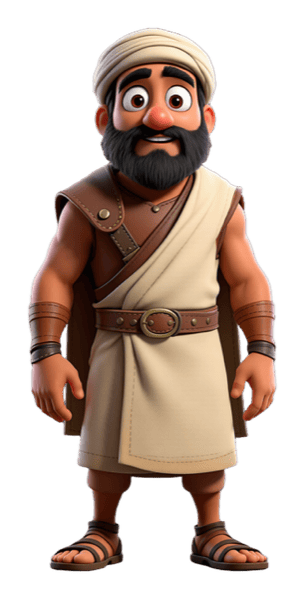
- A navy-and-gold biblical illustration of Moses standing east of the Jordan and speaking to the people.
- An educational map of the journey: Horeb, Kadesh-barnea, Mount Seir, Moab, Ammon, Heshbon, and Bashan.
- Concept cards: rebuke, memory, just judgment, trust, vision.
- A printable worksheet titled "Memory That Becomes Repair" for the Shabbat table or classroom.
Source and License Notes
This page is original content based on review of the Western Wall weekly Torah portion page as a benchmark for structure and search intent, verification of the portion range in Deuteronomy 1:1-3:22, and supplemental review of sources on Parashat Devarim and the Haftarah of Chazon. Do not copy protected wording from source sites. Full biblical quotations, vocalized text, cantillation marks, translations, audio recordings, designed PDFs, and third-party images require license review before publication.
Sources reviewed: Western Wall weekly Torah portion page; Sefaria, Deuteronomy 1:1-3:22 and Isaiah 1:1-27; Chabad, summary of Parashat Devarim and Torah reading page for Devarim.