

Related reading: Parashat HaMan for Livelihood - Text, Explanation, Audio, and Printable Guide and Weekly Torah Portion by Date.
Parashat Haazinu is Moses' great farewell song. After Parashat Vayeilech, where Moses strengthens the people and Joshua, he turns to heaven and earth as witnesses and teaches Israel a short, deep and powerful song: remember God's kindness, beware of forgetfulness and pride, and know that even after distance there is a way back.
This original learning page is designed for the Shabbat table, classroom, bar mitzvah preparation or a weekly Torah quiz. It includes a clear summary of Parashat Haazinu, key figures, places, central idea, Dvar Torah, questions for children and adults, quiz, haftarah note and a printable activity idea.
The Parashah At A Glance
- Book: Deuteronomy
- Reading: Deuteronomy 32:1-52
- Central theme: Moses' song as testimony, memory, rebuke and hope
- Time and place: the end of Moses' speeches, in the plains of Moab, shortly before his death and Israel's entry into the Land
- Key topics: heaven and earth as witnesses, God's greatness, God's kindness to Israel, the danger of forgetting, the eagle image, God as Rock, learning from the past, Moses ascending Mount Nebo
- Haftarah: usually the Song of David in II Samuel 22; when Haazinu is read on Shabbat Shuvah, some communities read the Shuvah haftarah from Hosea, Micah and sometimes Joel, depending on custom and calendar
- Quiz connection: a Parashat Haazinu quiz about Moses' song, the central images, Mount Nebo, haftarah and deeper questions about memory and return
Summary of Parashat Haazinu
The portion opens with a dramatic call: Moses invites heaven and earth to listen to his words. He describes Torah as teaching that comes down like rain and dew, not as noise but as a force that seeps in, waters and helps life grow.
Moses begins with praise of God. God is called the "Rock," a word of stability, faithfulness and justice. Against God's faithfulness stands the human danger of forgetting, becoming confused and crediting success only to ourselves. Moses tells the people to ask earlier generations, look at history and see how God chose Israel, led them and protected them.
The song then uses powerful images. God carries Israel like an eagle hovering over its young, protecting them and teaching them to fly. The good land, abundance and blessing can become gifts that draw people closer to God, but they can also become a place of forgetfulness and pride if a person grows used to goodness and stops giving thanks.
The song also describes failure. When Israel forgets the source of blessing and turns to idols, distance, pain and hiddenness follow. Yet even within the rebuke, hope does not disappear. God does not abandon Israel, and history does not end with failure. The song remains as testimony that remembers the way back.
After the song, Moses tells the people to pay close attention to these words and teach them to their children. Torah is not an empty thing; it is the life of the people. At the end of the portion, God commands Moses to ascend Mount Nebo, see the Land from afar and be gathered to his people. The portion ends near Moses' final farewell, but with a song that will keep speaking for generations.
Key Figures
Moses
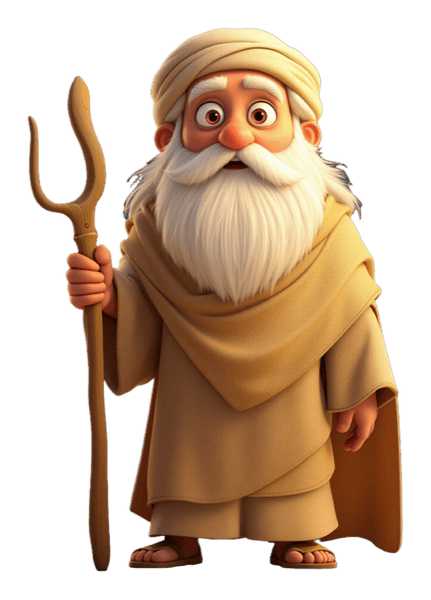
Moses stands at the end of his life and gives the people not only instructions but a song. He knows that words shaped as song can remain in memory even when generations change. In Haazinu, Moses is a leader, teacher and poet of the covenant.
Israel
Israel is the main listener of the song. The portion speaks to the people with love, warning and responsibility: remember the good, do not be carried away by pride, and pass memory to the next generation.
Joshua
Joshua appears near Moses' song and stands in the background of the leadership transition. He is about to receive a people that needs not only military and public organization, but also a spiritual language that can help it live in the Land without forgetting the journey.
Heaven and Earth
Heaven and earth are not human characters, but they serve as witnesses. They represent stability, continuity and memory: even when people change, the covenant and responsibility remain standing in the world.
Places in Parashat Haazinu
- The plains of Moab: the setting of Moses' final speeches before entering the Land.
- The Land of Israel: the Land seen from afar, where the people's spiritual memory will be tested.
- Mount Nebo: the mountain Moses is commanded to ascend in order to see the Land before his death.
- Heaven and earth: the vast space that serves as witness to the song.
- The heart and memory: the inner place where the song is meant to be kept and to shape action.
The Central Idea: Remember Who Gave Us Wings
Parashat Haazinu is about memory. Not technical memory, but the kind that holds identity together. Moses asks Israel to remember who carried them in the wilderness, who gave them life, who taught them to walk and who accompanies them as they enter a new Land.
One of the most beautiful images in the portion is the eagle. The eagle does not carry its young so that they remain dependent forever. It protects, hovers, carries and teaches them to fly. Divine kindness works in a similar way: it does not cancel human responsibility; it creates it. Those who have been given wings must learn to use them well.
So Haazinu's question is not only "what happens in the portion," but "what do we do with the good we have received?" Does abundance lead us to gratitude, generosity and upright living, or does it make us forget the source? Moses' song comes to wake the heart before forgetfulness becomes habit.
A Short Dvar Torah for Haazinu
Moses opens his song by addressing heaven and earth. If he wants to speak to human beings, why turn to the world around them? Perhaps because Moses knows that people forget, while heaven and earth remind us of permanence. They are above us and below us, on days of success and on days of difficulty, asking quietly: do you remember who you are?
The song compares Torah to rain and dew. Rain can be strong and noticeable. Dew is almost silent, but it waters the world gently. Torah and education work that way too. Sometimes there are great moments of awakening, but most days Torah works like dew: a kind word, a small habit, a question around the Shabbat table, a short quiz with children, a verse that stays in the heart.
Parashat Haazinu teaches that not every change begins with noise. Sometimes it is enough to truly listen: to heaven, to earth, to earlier generations, to our children and to the quiet words that bring us back to the center. When we listen, Moses' song stops being an ancient text and becomes a daily compass.
Shabbat table question: Which word, verse or small memory helps me not take the good in my life for granted?
The Haftarah of Haazinu
The regular haftarah for Parashat Haazinu is the Song of David in II Samuel 22. The connection is clear: both Moses and David speak a song at the end of a great period of leadership and struggle. Both songs use the image of God as Rock, and both look broadly at rescue, faithfulness, justice and gratitude.
When Haazinu is read on Shabbat Shuvah, the Shabbat between Rosh Hashanah and Yom Kippur, some communities read the call "Return, Israel" from Hosea, with verses from Micah and sometimes Joel according to custom. For a printed sheet, bar mitzvah reading or communal lesson, the local calendar and synagogue custom should be checked.
Questions for Children
- Why does Moses call heaven and earth to listen?
- What do rain and dew remind us of in the portion?
- Which image describes God's care for Israel?
- What does it mean that God is called the "Rock"?
- Why is it easy to forget gratitude precisely when life is full of good things?
- What does Moses ask the people to do with the words of Torah?
- What good thing from this week should we say out loud and remember?
Questions for Adults and Family Learning
- Why does Moses choose to end his words to Israel with a song?
- What role do heaven and earth play as witnesses to the covenant?
- How does the eagle image teach the relationship between kindness and responsibility?
- What is the link between material abundance and the danger of forgetting?
- How can we teach children gratitude without turning the conversation into a lecture?
- What is the difference between rebuke that pushes away and rebuke that remembers a way back?
- How can Haazinu guide the Ten Days of Repentance?
Parashat Haazinu Quiz
Questions
- In which book of the Torah is Parashat Haazinu?
- What is the reading range of the portion?
- Whom does Moses address at the beginning of the song?
- To which two things does Moses compare his words at the beginning?
- Which repeated title for God expresses stability and faithfulness?
- Which bird is used as an image of God's care for Israel?
- What spiritual danger can follow abundance and success?
- Where is Moses commanded to ascend at the end of the portion?
- What is the regular haftarah for Parashat Haazinu?
- What should be checked when Haazinu is read on Shabbat Shuvah?
Answers
- Deuteronomy.
- Deuteronomy 32:1-52.
- Heaven and earth.
- Rain and dew.
- "Rock."
- An eagle.
- Forgetting God, pride and turning to false paths.
- Mount Nebo.
- The Song of David in II Samuel 22.
- The community custom and local calendar, because customs differ regarding the Shabbat Shuvah haftarah.
Printable Activity Idea
Create a sheet called "My Song of Memory." Divide it into four parts:
- A drop of Torah: a verse, word or small idea from Haazinu that I want to remember.
- An eagle's wing: who helped me, carried me or gave me courage along the way?
- A rock of gratitude: one stable and good thing in my life for which I want to give thanks.
- A question for the next generation: one question I would like to ask a grandparent, parent, teacher or child in the family.
For younger children, add an illustration of heaven, earth and an eagle above a path in the wilderness. In the classroom, the activity can become a "Haazinu" board: each student adds one drop of gratitude or memory, and together the class creates a small collective song.
FAQ About Parashat Haazinu
Where is Parashat Haazinu in the Torah?
Parashat Haazinu is in Deuteronomy 32:1-52.
What is the main theme of Haazinu?
The main theme is Moses' song: testimony for future generations that remembers God's kindness, warns against forgetfulness and pride, and calls Israel to keep Torah as life.
Why does Moses turn to heaven and earth?
Heaven and earth serve as stable, lasting witnesses. They emphasize that the covenant is not limited to one generation, but stands over time and accompanies Israel through history.
What does the image of Torah as rain and dew mean?
It teaches that words of Torah nourish and help life grow. Sometimes they are felt like rain, and sometimes they work gently like dew, but in both ways they bring life to heart and action.
Why is God called "Rock" in the portion?
"Rock" expresses stability, strength and faithfulness. In the portion, the word highlights that God is faithful and just even when people or the nation become confused and forget.
What happens at the end of Parashat Haazinu?
At the end of the portion, God commands Moses to ascend Mount Nebo, see the Land of Canaan from afar and be gathered to his people. It prepares for Moses' final farewell.
What is the haftarah of Parashat Haazinu?
The regular haftarah is the Song of David in II Samuel 22. When the portion is read on Shabbat Shuvah, customs differ, so the community custom should be checked.
Parashat Haazinu Quiz - Call To Action
After learning the summary, Moses' song can become a family game: who remembers what "Haazinu" means, who the witnesses are, what the eagle represents, why God is called Rock and what happens at Mount Nebo?
Prepare a Parashat Haazinu quiz for the Shabbat table, classroom or Ten Days of Repentance activity, and add a bonus question: what good thing in my life do I not want to take for granted?
Image and Illustration Ideas
- Moses standing before heaven and earth, with a gentle desert background in navy and gold.
- An eagle hovering above its young as a symbol of kindness, protection and learning to fly.
- Drops of rain and dew falling on an open book or desert path.
- Mount Nebo and a view toward the Land in a respectful modern biblical style.
- A printable Bible Quiz activity sheet titled "My Song of Memory."
Source and License Note
This page was written as original content based on review of Parashat Haazinu in Deuteronomy 32, the Kotel Haazinu page as a reference for structure and user intent, Sefaria for verifying the reading range and biblical anchors, and Chabad's Haazinu materials for supplemental verification of the main themes, reading range and haftarah notes. Do not add full biblical text, translations, vocalization, cantillation, commentaries, images, audio or PDF files from external sources without license and custom review.