
Bible Quiz Blog
A Sanctuary in Time: The Psychology of the Bible Quiz, Competitiveness, and Boundaries of Holiness
A Sanctuary in Time: The Psychology of the Bible Quiz, Competitiveness, and the Boundaries of Holiness
The profound social change we have experienced since October 2023 taught us a painful but necessary lesson about learning, resilience, and connection to heritage. We discovered that a world of mercy alone, a world devoid of friction in which "everyone wins" and there is no price for a mistake, is destined to fail. In order to truly connect to our roots, we need challenge, rigid rules, and healthy competitiveness that will turn passive knowledge into an active deed.
This is exactly where the psychology of Jewish trivia games enters the picture, and in particular preparation for the Bible quiz. On its face, this is a game. But beneath the surface lies an ancient psychological mechanism that combines judgment and punishment with kindness and spirit. This tension is not a modern invention; it is planted deep in our most foundational text, in the dramatic encounter between the commandment to build the Mishkan and the observance of Shabbat.
The Problem with Boundaryless Learning
In recent years, many education systems have tried to soften the learning experience. The idea was simple: if we just make the material accessible in a pleasant way, without stressful tests or competition, students will fall in love with it. The result on the ground was the complete opposite. Disconnection, boredom, and lack of interest became an epidemic when it comes to studies of Judaism and Bible.
And here is precisely the problem. When we remove the element of judgment — the clear rules, the possibility of making a mistake, and the competitiveness — we also remove the value of success. A trivia game works because it has rigid rules. A wrong answer results in a loss of points. Time is limited. There is a winner and there is a loser. This rigidity is what produces the adrenaline, and it is what causes the knowledge to be etched in the memory. Without this rigid framework, the content simply evaporates into the air.
The Ancient Solution: The Tension Between Creation and Rest
The understanding that holiness and connection require a rigid framework is not new. Since 2015, when the in-depth analysis of Rabbi Elchanan Samet was published on the VBM website, this approach has matured significantly, and today we understand better its psychological implications for education.
Rabbi Samet points to a fascinating phenomenon in the Book of Exodus. Parashat Ki Tisa summarizes the long and detailed commandments about building the Mishkan. The building of the Mishkan is the peak of human endeavor: precise measurements, specific materials, rigid rules of do and do not. This is a world of absolute judgment. Every small deviation from the instructions disqualifies the structure. But the verses that conclude the commandment, in Exodus 31:12-17, do not deal with building at all, but rather with the commandment to observe Shabbat.
The Building of the Mishkan Against the Holiness of Time
This juxtaposition is not coincidental. The fact that the commandment about Shabbat appears immediately at the end of the commandment about the Mishkan — and from here we also learn the prohibition against building the Mishkan on Shabbat — reveals a deep internal tension. Man longs to build a house for God in the physical world. He wants laws, measurements, gold, and silver. He needs the clear framework of the endeavor.
But the commandment to stop on Shabbat hints to us that true holiness does not depend on the physical structure. Shabbat is a sanctuary in time. It does not require physical building, but rather its cessation. This is a hidden and critical lesson: in our eagerness to create a physical divine presence through laws and structures, we may forget that the supreme holiness is revealed precisely in time, in rest, and in spirit.
The Moment of Insight: The Game as a Modern Sanctuary
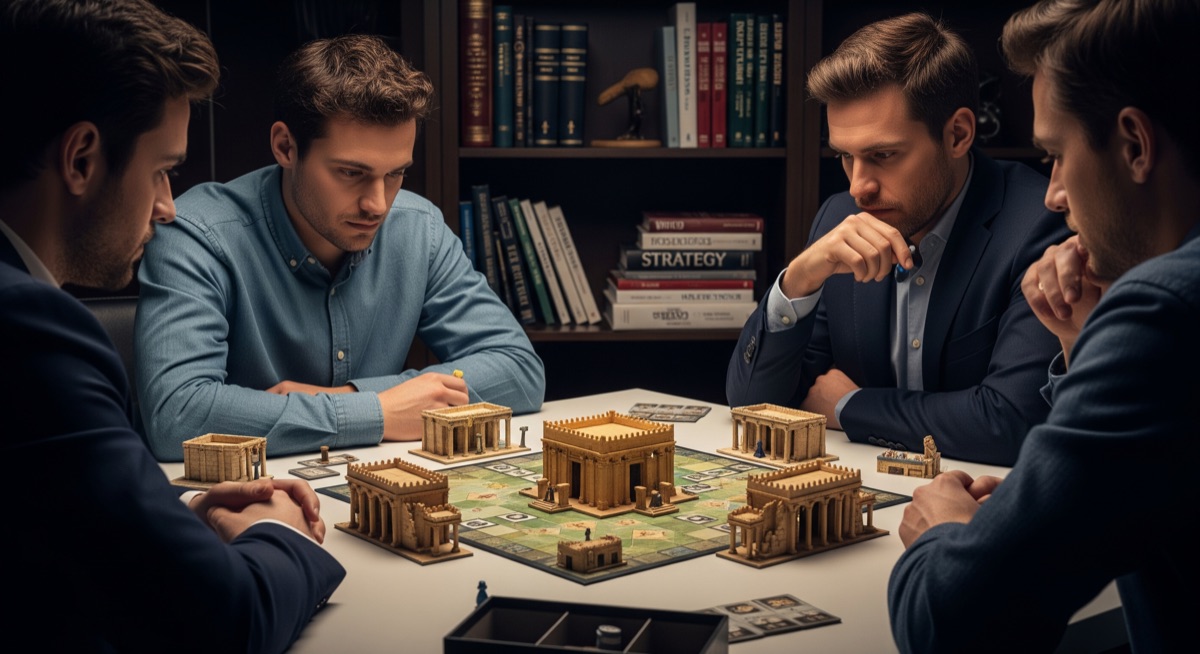
Here occurs the fascinating connection to the world of gamification and learning. When a child or adult sits down to play against a Bible quiz system, they are in fact engaged in building a cognitive sanctuary. They gather verses, memorize the names of historical figures, cope with a time limit, and accumulate points. This is a Sisyphean, competitive endeavor full of judgment.
But this is only the means, not the goal. The competitiveness and the rigid rules of the game provide the tools to build the structure. The real challenge is to know when to stop the race for points and let the meaning of the verses seep in. When the game ends and the knowledge remains, that same sanctuary in time is created. The rigid rules of the trivia created the vessel in which the spirit can dwell.
Applications from the Field: How It Looks in Practice
The combination of rigid rules and spiritual connection is expressed in several different arenas in Israeli society today.
1. Preparation for the National Competition
Students preparing for the national and international Bible quiz experience this tension every day. Hours of rigorous memorization require iron discipline. The competitiveness pushes them to the very limit of their memory capacity. But the graduates of this process almost always testify that the real prize is not the title, but the proficiency that allows them to live the Bible in their daily lives. The competitive discipline built within them a permanent home for the heritage.
2. The Bible Teacher in the Classroom
Teachers looking for experiential aids discover that specifically introducing a competitive element into the classroom changes the picture. Instead of lecturing about the weekly Torah portion, a teacher who runs an interactive quiz with a leaderboard brings the classroom to life. The judgment in the game — the right or wrong answer — forces the students to take responsibility for their learning.
3. The Family Shabbat Table
Many families looking for a values-based activity for Shabbatot and holidays have found the perfect solution in Jewish trivia. After the singing of the Kabbalat Shabbat psalms (95-99), the family gathers for a quiz about the weekly Torah portion. The rules turn the discussion from yet another passive conversation into an active event in which everyone, from the oldest to the youngest, tries to demonstrate their knowledge.
The Advantages of Judgment-Based Learning
The psychology behind this approach is clear. Challenge- and competition-based learning produces high emotional engagement. When we fear making a mistake in the game, our brain is at peak alertness. This alertness encodes the information into long-term memory far more efficiently than skimming through a reading.
In addition, the gamification grants a sense of capability. When a child succeeds in cracking a difficult question about the Book of Kings, the feeling of victory strengthens their self-confidence and their sense of belonging to the text. They are no longer an observer watching the Jewish story from the side; they are an active player within it.
When Competitiveness Collapses In on Itself
This sounds excellent, but this is exactly where most people fall. The other side of the coin is revealed when we violate the delicate balance between the Mishkan and Shabbat. When is this approach wrong? When the competitiveness becomes the sole goal, and the content becomes merely an excuse.
If a child bursts into tears because they lost a quiz about the Book of Genesis, and the parent or teacher focuses only on their position on the leaderboard, we have crossed a red line. In such a situation, we have built the Mishkan inside Shabbat. We have desecrated the spiritual goal for the sake of the physical structure. Another common mistake is deliberately creating tripping-up questions just to produce difficulty, without them serving a deep understanding of the text. When judgment completely takes over and there is no room for kindness and encouragement, learning turns into a trauma instead of a constructive experience.
Practical Implications for Tomorrow Morning
How do we apply this insight in practice? The secret lies in the right dosage of boundaries and space.
First, define clear rules. If you are playing a family or classroom Bible quiz, insist that there is one correct answer, and that there is a limited time. Do not compromise on the standard. This judgment is important for building respect for the text.
Second, be careful to allow time for processing. After the question has been answered and the points have been distributed, stop the race. Take a minute to talk about the meaning of the verse or the moral lesson of the historical figure. This is the "Shabbat" moment of the game — the moment when we stop collecting points and begin collecting meaning.
Key Points to Take Forward
- Competitiveness and rigid rules are not the enemies of learning, but the tools that make it possible. They build the cognitive "sanctuary."
- Passive learning devoid of challenge usually evaporates, whereas judgment-based play produces emotional engagement and long-term memory.
- The juxtaposition of the Shabbat commandment to the Mishkan teaches us that endeavor and competition must also make room for the holiness of time and meaning.
- The greatest danger is turning victory into the sole goal, which leads to a disconnection from the values at the foundation of the biblical text.
This balance between effort and relaxation, between rigid rules and free connection, is the key to the next generation of Bible lovers. If you are looking for a way to bring this balance into the home or the classroom, trying out an online Bible quiz system can be your first step. There, between the challenging questions and the historical figures, you can build your own private sanctuary — and no less important, know when to stop and enjoy the journey.