
Related reading: Parashat Devarim: Summary, Dvar Torah and Quiz and Parashat Haazinu: Summary, Dvar Torah and Quiz.
Parashat Beshalach is the portion in which freedom becomes real: Israel leaves Egypt, Pharaoh pursues, the Sea of Reeds splits, the people sing the Song at the Sea, and the wilderness begins teaching lessons of faith, water, manna, and Shabbat. At the end of the portion, Amalek attacks, showing that freedom does not end at the moment of escape; it must be guarded, nourished, and given meaning. This page includes a clear summary, figures and places, a central idea, a Shabbat-table Dvar Torah, questions for children and adults, a Parashat Beshalach quiz, Haftarah notes, and source/licensing guidance.
This is an original guide to the weekly Torah portion. It does not copy full biblical text, protected commentary, or summaries from other sites. For Torah reading, Haftarah, cantillation, or exact text, use a reliable Chumash, Tanakh, or licensed source.
Parashat Beshalach in Short
Parashat Beshalach appears in the Book of Exodus, from 13:17 through 17:16. It opens with God leading the people not by the short road through the land of the Philistines, but by the wilderness route. The pillar of cloud and pillar of fire accompany them, and Pharaoh regrets releasing Israel and pursues them with his army.
The Israelites reach the sea, with Egypt behind them and water ahead. The people panic, Moses strengthens them, and the sea splits. Israel crosses on dry land, and the Egyptians drown in the sea. After the great rescue, Moses and the people sing the Song at the Sea, and Miriam the prophetess leads the women with drums and dancing.
Then the wilderness journey begins: at Marah the water is bitter and God sweetens it; in the wilderness of Sin, manna falls from heaven and the people learn to take a daily portion and a double portion for Shabbat; at Rephidim there is no water, and Moses brings water from the rock. At the end of the portion Amalek attacks Israel; Joshua fights, while Moses stands on the hill with his hands lifted upward.
What Happens in the Portion?
| Section | What Happens? | Main Idea |
|---|---|---|
| Departure and pursuit | Pharaoh chases Israel to the sea | New freedom can still meet old fear |
| Splitting of the Sea | The sea splits and Israel crosses | Faith becomes a step into the unknown |
| Song at the Sea | Moses, the people, and Miriam express gratitude | A miracle should become memory and language |
| Manna and Shabbat | The people receive daily food and learn Shabbat | Trust is built one day at a time |
| Water and Amalek | Water comes from the rock and Amalek attacks | Freedom includes needs, tests, and struggle |
Key Figures
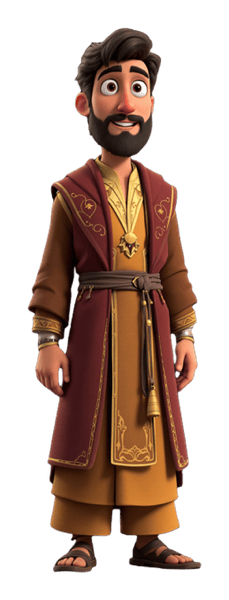
Moses
Moses leads the people through fear, complaint, and faith. He stands before the sea, before thirst, and during the battle with Amalek. The portion shows that leadership is not only a grand declaration; it is the ability to hold a frightened people on a long road.
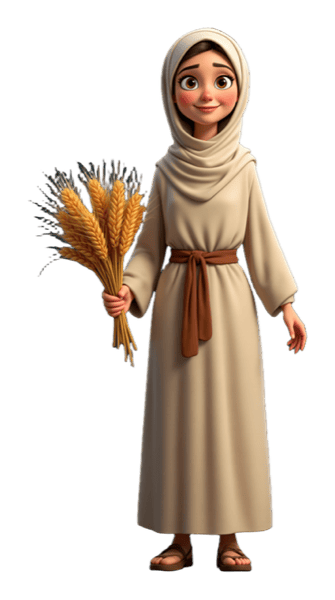
Miriam
Miriam the prophetess leads the women with drums and dancing after the splitting of the sea. She teaches that redemption needs women's voices, joy, rhythm, and gratitude that does not remain hidden in the heart.
The Israelites
The Israelites are in a delicate stage: they have left Egypt, but they are still learning how to be free. They fear the Egyptians, complain about water and bread, and gradually learn that freedom requires trust, discipline, and the ability to receive what is needed for today.
Joshua and Amalek
Joshua appears as a battle leader against Amalek. Amalek attacks the people on the road, when they are tired and vulnerable. The struggle teaches that spiritual freedom requires resistance against forces that weaken and discourage.
Places in the Portion
- The Sea of Reeds - the place of rescue and the Song at the Sea.
- The wilderness of Shur and Marah - the place of thirst and sweetened water.
- The wilderness of Sin - where the manna falls.
- Rephidim - the place of water from the rock and the battle with Amalek.
Central Idea: Freedom Is Learned in Small Steps
Parashat Beshalach begins with a great miracle, but it does not remain there. After the splitting of the sea come ordinary needs: no water, no bread, questions about Shabbat, exhaustion, and war. That may be the portion's deepest message: freedom is not only leaving Egypt; freedom is learning to live differently after leaving.
In Egypt, everything was forced and fixed, even when it was painful. In the wilderness there is choice, responsibility, and uncertainty. That is why the manna falls each day, not once for the whole year. The people learn faith in small portions: take what is needed today, leave room for tomorrow, and discover that on Shabbat one does not need to chase more.
Parashat Beshalach teaches that the miracle opens the road, but daily habits build freedom.
Dvar Torah for the Shabbat Table
Ask: why does the Torah move from the splitting of the sea, one of its greatest miracles, directly into stories of bitter water, hunger, and complaints?
Perhaps the Torah wants to show that faith is not tested only during moments of song. It is easy to sing when the sea opens. It is harder to trust when there is no water, no food, and the road is long. That is why Beshalach places the Song at the Sea beside the manna: the great miracle and the daily bread are part of the same faith.
At the Shabbat table, ask each person: what small "manna" did I receive this week - something ordinary that quietly helped me?
Song at the Sea and Miriam's Song
The Song at the Sea is a song of gratitude after rescue. It is not only a report of what happened, but a way to turn a miracle into memory. The song gives the people words, rhythm, and identity: we were not only saved; we know whom to thank.
Miriam adds a communal and joyful dimension. She goes out with drums and dancing, and the women join her. Gratitude becomes movement, music, and shared memory.
Before publishing the full Song at the Sea text, vocalization, cantillation, translation, or audio, the source and license should be reviewed.
Haftarah for Parashat Beshalach
The Haftarah of Beshalach focuses on Deborah, Barak, and the Song of Deborah in the Book of Judges. In many customs, Judges 4-5 or parts of those chapters are read, with differences in exact starting and ending points. The connection to the portion is clear: both include a great rescue, the fall of an enemy, a female leader, and a song that tells the story of deliverance.
The Song at the Sea and the Song of Deborah teach that biblical song is not only poetry. It is national memory, faith, and a declaration that history is not merely a chain of accidents.
Questions for Children
- Who chased the Israelites after they left Egypt?
- What happened at the Sea of Reeds?
- Who went out with the women with drums and dancing?
- What was the manna?
- Why did the people gather a double portion on Friday?
Questions for Adults and Family Discussion
- Why were the people afraid even after leaving Egypt?
- What does the manna teach about trust and responsibility?
- How does song turn an event into memory?
- What is the difference between a one-time miracle and daily faith?
- What does Amalek symbolize beyond the historical battle?
Parashat Beshalach Quiz
- In which book of the Torah is Parashat Beshalach found?
- What guided Israel by day and by night?
- What did Moses tell the people before the sea split?
- What is the song after the splitting of the sea called?
- Who led the women in song?
- Where was the water bitter?
- What was forbidden with the manna from day to day?
- On which day was a double portion of manna gathered?
- Who fought Amalek?
- What is the central theme of the Haftarah?
CTA: Go to the Parashat Beshalach quiz and test how well you know the splitting of the sea, the Song at the Sea, the manna, Shabbat, and the battle with Amalek.
Short Printable Activity
Activity title: "From the Sea to the Wilderness."
- Write one big moment of gratitude you remember.
- Write one small "manna" you received this week - something ordinary that helped you.
- Choose one sentence of thanks for your family.
- For children: draw a split sea next to a small basket of manna.
Add a personal line: "This week I will learn to give thanks for small things too."
Frequently Asked Questions
What is the main subject of Parashat Beshalach?
The portion focuses on the move from miraculous freedom to wilderness faith: the splitting of the sea, the Song at the Sea, manna, Shabbat, water, and Amalek.
Why is Beshalach called Shabbat Shirah?
Because the Song at the Sea is read in this portion, the great song Moses and Israel sing after the splitting of the sea.
What is the manna in Parashat Beshalach?
The manna is the food that falls from heaven in the wilderness. Through it, the people learn to take a daily portion, avoid hoarding, and prepare for Shabbat with a double portion.
Who appears in the Haftarah of Beshalach?
Deborah the prophetess, Barak, Sisera, and Yael appear in the Haftarah. It includes the Song of Deborah, which parallels the Song at the Sea through rescue and song.
How can Beshalach be taught to children?
Divide the portion into four stations: the Sea of Reeds, the Song at the Sea, manna and Shabbat, and the battle with Amalek. At each station, ask what the people learned about faith and freedom.
Developer Implementation Notes
Recommended schema: Article, BreadcrumbList FAQ Page, and HowTo for the printable activity. Add quick navigation: summary, figures, places, central idea, Dvar Torah, Haftarah, quiz FAQ and printable. For the quiz, consider separate children/adult modes, with internal links to Song at the Sea and Parashat Yitro.