
Related reading: Parashat Matot: Summary, Dvar Torah and Quiz and Parashat Masei: Summary, Dvar Torah and Quiz.
Parashat Lech Lecha is the third portion in the Book of Genesis. In it, the journey of Avram and Sarai begins: toward the land, toward covenant and toward destiny. After the stories of creation, the flood and the Tower of Babel, the Torah turns its focus to one family through whom blessing will reach the nations. This is a parashah about leaving the familiar, trusting a path that is not yet fully clear, and accepting responsibility that begins with one step.
Parashat Lech Lecha in Brief
Parashat Lech Lecha is read in Genesis, after Parashat Noach. The Torah reading runs from Genesis 12:1 to Genesis 17:27. According to the sources reviewed for this parashah, the common haftarah is Isaiah 40:27-41:16, though community custom should be checked before publishing a full text.
The parashah moves through several major scenes:
- The call to Avram - God commands Avram to leave his land, birthplace and father's house for the land that will be shown to him.
- The journey to Canaan - Avram travels with Sarai and Lot, reaches Shechem, Beit El and the Negev, and builds altars.
- Famine and descent to Egypt - A famine in the land brings Avram and Sarai to Egypt, where the family faces fear and danger.
- The separation from Lot - Because of quarrels between the shepherds, Avram suggests that he and Lot separate peacefully. Lot chooses the Jordan plain and draws near to Sodom.
- The war of the kings and the rescue of Lot - Avram goes out to rescue Lot, defeats the kings and meets Malki-Tzedek.
- The Covenant Between the Pieces - God promises Avram descendants and land, placing Israel's story within a broad horizon of exile and redemption.
- Hagar and Yishmael - Sarai gives Hagar to Avram, Hagar gives birth to Yishmael, and the family faces pain and tension.
- Circumcision and the change of names - Avram becomes Avraham, Sarai becomes Sarah, and circumcision is given as the covenant sign for generations.
Key Figures in the Parashah
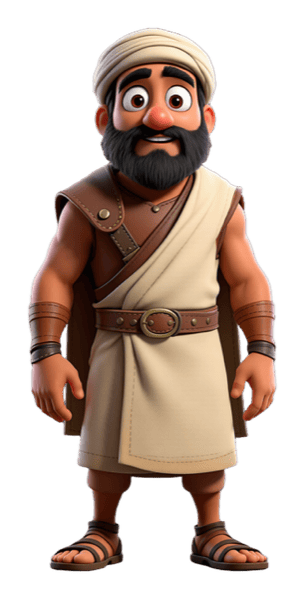
Avram / Avraham
Avram is the central figure of the parashah. He is called to leave what is familiar and go to a land whose details are not fully revealed to him at the outset. Throughout the parashah he emerges as a person of faith, responsibility, future hospitality, courage in battle and humility in the face of wealth and power. At the end, his name is changed to Avraham, father of a multitude of nations.
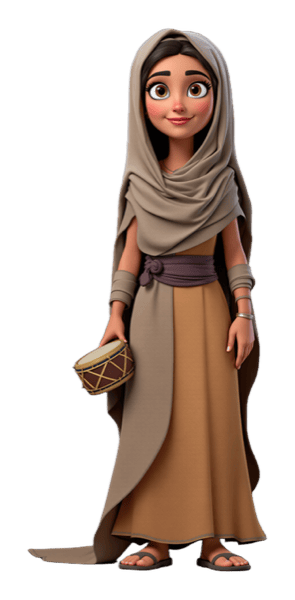
Sarai / Sarah
Sarai leaves on the great journey with Avram. She is present in the most complex moments: the descent to Egypt, childlessness, the giving of Hagar and the future of the family. Her name change to Sarah shows that she too is part of the covenant and the promise, not merely a companion to the journey.
Lot
Lot travels with Avram, but his choice of the Jordan plain brings him close to Sodom. Through Lot, the parashah raises a deep educational question: how does a person choose where to live? Is the choice based only on visible abundance, or also on the moral atmosphere of the place?
Hagar and Yishmael
Hagar is Sarai's maidservant and the mother of Yishmael. Her story touches real human pain: longing for a child, jealousy, flight, being seen and being cared for. The birth of Yishmael teaches that the covenant with Avraham does not erase family complexity; it unfolds within a real and difficult world.
Malki-Tzedek and the King of Sodom
After the war of the kings, Avram meets two contrasting figures. Malki-Tzedek, king of Shalem, blesses Avram in the name of God Most High; the king of Sodom offers a material bargain. Avram chooses not to be enriched by the king of Sodom, preserving moral clarity and spiritual independence.
Places and Spatial Ideas
- Charan - the point of departure from the familiar home into the covenantal journey.
- The land of Canaan - the land toward which Avram travels, where he receives promises of descendants and land.
- Shechem, Elon Moreh and Beit El - stations of arrival, altar-building and calling in God's name.
- Egypt - a place of famine, fear and family testing.
- The Jordan plain and Sodom - a region that looks promising from the outside but carries moral danger.
- The Valley of Shaveh and Malki-Tzedek - a meeting place between military victory, blessing and spiritual recognition.
- The Covenant Between the Pieces - a moment of historical promise, responsibility and future memory.
Central Idea: Walking Before Everything Is Clear
Parashat Lech Lecha begins with a command that sounds simple but requires great courage: go. Avram does not receive a complete map, a fixed timeline or an explanation of every station. He receives a call, a promise and a direction. From here grows one of the parashah's deep ideas: faith is not waiting until everything is certain; faith is the ability to walk responsibly even when the end of the road cannot yet be seen.
But Avram's journey is not an escape from the world. The more he walks, the more his responsibility grows: to his family, to Lot, to the members of his household, to the covenant, to the land and to future generations. "Lech lecha" is not only a private journey inward; it is also a movement toward a mission that matters to others.
A Short Dvar Torah for Parashat Lech Lecha
The words "lech lecha" can be read as a double call: go from where you are, and go toward who you are meant to become. Avram leaves land, birthplace and father's house, but the Torah does not portray him as someone who erases his past. He takes Sarai, Lot and the people they had gathered in Charan. In other words, the spiritual journey does not begin from nothing; it takes what has already been built and points it forward.
That is a beautiful point for the Shabbat table. Sometimes a person thinks that real change must be dramatic: leave everything, open a new page, become someone entirely different. Parashat Lech Lecha teaches that change begins with a faithful step. Avram walks, pauses, builds an altar, calls in God's name, faces famine, corrects choices, rescues Lot and keeps going. Holiness is not found only in the first moment of inspiration, but in the steadiness that follows.
For children, it can be said simply: everyone has a small "lech lecha." Maybe it is apologizing, helping at home, learning something difficult or choosing a good friend even when it is not easy. We do not always know what will happen next, but we can take the next good step.
The Haftarah for Parashat Lech Lecha
The common haftarah for Parashat Lech Lecha is Isaiah 40:27-41:16. It speaks of renewed strength, the choosing of Israel and encouragement for a people that may feel tired or far away. The connection to the parashah is fitting: just as Avraham is called to set out in trust, the haftarah strengthens those who are on a journey and reminds them that they do not carry the path alone.
Parashat Lech Lecha for Children
A good way to learn the parashah with children is to divide it into seven pictures:
- Avram hears the call "lech lecha."
- Avram, Sarai and Lot set out.
- Avram builds an altar in the land of Canaan.
- Avram and Sarai go down to Egypt during a famine.
- Avram and Lot separate peacefully.
- Avram rescues Lot and meets Malki-Tzedek.
- Avram and Sarai receive new names and a covenant.
Conversation question for children: what is one good step we can take this week even if it feels a little unfamiliar or difficult?
Questions for Children and Adults
Questions for Children
- Who received the command "lech lecha"?
- Who went on the journey with Avram?
- Why did Avram and Sarai go down to Egypt?
- From whom did Avram separate in order to prevent fighting?
- What new name did Avram receive at the end of the parashah?
Questions for Adults
- Why does the call "lech lecha" appear without a fully detailed destination at the beginning?
- What does the separation from Lot teach about peace, boundaries and family responsibility?
- What is the meaning of Avram's refusal to take from the property of the king of Sodom?
- How does the Covenant Between the Pieces connect a personal promise with national history?
- What do the name changes from Avram to Avraham and Sarai to Sarah add to our understanding of the covenant?
Parashat Lech Lecha Quiz
- In which book of the Torah is Parashat Lech Lecha found?
- What is the Torah-reading range of Parashat Lech Lecha?
- From which city did Avram set out at the beginning of the journey, according to the end of Parashat Noach and the beginning of Lech Lecha?
- Who chose to live in the Jordan plain?
- Whom did Avram go out to rescue in the war of the kings?
- Who blessed Avram after the war?
- What was the name of Yishmael's mother?
- What covenant sign appears at the end of the parashah?
CTA: Continue to the Parashat Lech Lecha quiz and see how much you remember about the journey of Avraham and Sarah, the separation from Lot, the Covenant Between the Pieces, Hagar and Yishmael, and circumcision.
Frequently Asked Questions
What is Parashat Lech Lecha?
Parashat Lech Lecha is the third Torah portion in Genesis. It tells of God's call to Avram to set out, his journey to Canaan, the descent to Egypt, the separation from Lot, the war of the kings, the Covenant Between the Pieces, Hagar and Yishmael, and circumcision.
What is the Torah-reading range of Parashat Lech Lecha?
The reading runs from Genesis 12:1 to Genesis 17:27. It begins with the command "lech lecha" and ends with the circumcision of Avraham and the members of his household.
What is the central idea of Parashat Lech Lecha?
One central idea is that faith begins with a step of responsibility. Avraham walks before everything is clear, yet at every station he learns to build a path, a family, a covenant and a mission.
What is the haftarah for Parashat Lech Lecha?
The common haftarah is Isaiah 40:27-41:16. It deals with strength, encouragement and the choosing of Israel, and connects to Avraham's journey through the theme of walking in trust.
How can Parashat Lech Lecha be taught to children?
It is helpful to teach it as a journey story: call, departure, stations in the land, difficulty in Egypt, separation from Lot, rescue and covenant. Then children can ask what good step each of them can take this week.
Does this page include the full text of the parashah?
Developer Implementation Notes
Recommended schema: Article, BreadcrumbList FAQ Page and HowTo for "how to learn Parashat Lech Lecha with children." On mobile, open with a short summary and then navigation buttons: summary, figures, Dvar Torah, haftarah, quiz and FAQ. The quiz should ideally appear as a short interactive module with expandable answers.